

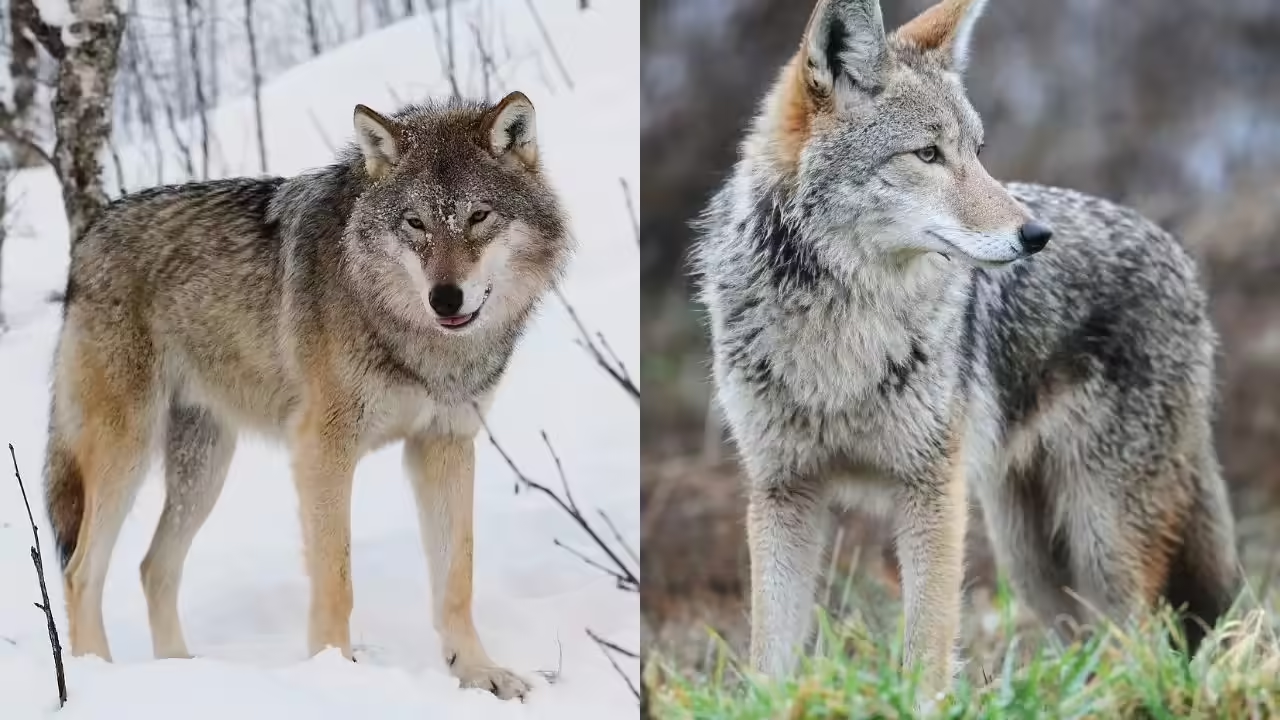
The dire wolf vs grey wolf comparison fascinates anyone curious about prehistoric predators and modern wildlife. Thanks to popular media like Game of Thrones, many picture dire wolves as massive, fearsome beasts, yet the reality reveals nuanced distinctions rooted in science. While both species share a wolf-like appearance shaped by similar hunting lifestyles, genetic research shows they belong to entirely separate evolutionary lines. This article explores their physical traits, habitats, behaviors, and fates to clarify what truly sets the extinct dire wolf apart from the resilient grey wolf still roaming today. Understanding these contrasts highlights nature’s adaptability and the fragility of specialized species.
Physical Characteristics: Size, Build, and Adaptations
When examining the dire wolf vs grey wolf in terms of physique, clear differences emerge in overall robustness. Dire wolves stood about three feet at the shoulder, similar to large grey wolves, but weighed 25 percent more on average—typically 130 to 150 pounds, with some reaching 175 pounds or higher. Their bodies featured thicker legs, broader shoulders, wider heads, and a stockier frame designed for power rather than speed. Skulls were larger with stronger jaws and teeth optimized for crushing bone, giving them superior bite force suited to large prey. In contrast, grey wolves maintain a leaner, more agile build with longer legs, enabling endurance chases across varied terrain. These structural variations reflect distinct survival strategies forged over millions of years.
Evolutionary History and Genetic Insights
The evolutionary story behind the dire wolf vs grey wolf reveals they are not close relatives at all. Genetic studies indicate their lineages diverged around 5.7 million years ago, with dire wolves evolving entirely in the Americas as part of an ancient canine branch now classified as Aenocyon dirus. Grey wolves, scientifically Canis lupus, trace their origins to Eurasia before spreading globally. Despite superficial similarities, no interbreeding ever occurred between them—a fact confirmed by DNA from fossils. This separation underscores convergent evolution, where unrelated species develop comparable traits due to parallel environmental pressures. Dire wolves represent a unique New World lineage, distinct even from coyotes and modern dogs.
Habitat and Geographic Distribution
Habitat preferences further distinguish the dire wolf vs grey wolf comparison. Dire wolves thrived across North and South America during the Late Pleistocene, favoring open grasslands, plains, and some forested areas from sea level up to high elevations. They avoided extreme northern latitudes near ice sheets, limiting their range to regions rich in megafauna. Grey wolves, however, demonstrate remarkable adaptability, inhabiting diverse environments worldwide—from Arctic tundra and forests to deserts and mountains. This flexibility allowed grey wolves to survive climate shifts and human expansion, while dire wolves remained tied to specific Ice Age ecosystems that eventually vanished.
Diet, Hunting Strategies, and Prey Selection
Diet and hunting methods highlight practical differences in the dire wolf vs grey wolf matchup. Dire wolves specialized as pack hunters targeting massive Pleistocene herbivores like ancient bison, horses, ground sloths, and camels. Their powerful jaws and robust teeth enabled bone-crushing bites to subdue and process large carcasses efficiently. Grey wolves pursue a broader, more opportunistic diet, including deer, elk, smaller mammals, and even scavenging. They rely on coordinated endurance pursuits and teamwork rather than sheer crushing power. This dietary versatility helped grey wolves adapt when large prey disappeared, whereas dire wolves struggled as megafauna populations declined.
Behavior and Social Structure
Social dynamics in the dire wolf vs grey wolf reveal both shared and unique traits. Both species lived in packs, cooperating to hunt and raise young, which enhanced survival in competitive environments. Dire wolves likely formed tight-knit groups focused on tackling oversized prey, though their smaller brain-to-body ratio suggests slightly less behavioral flexibility than grey wolves. Modern grey wolves exhibit complex social hierarchies, communication through howls, and adaptability to changing pack sizes or territories. These behavioral parallels stem from convergent lifestyles, yet grey wolves’ intelligence and versatility have proven crucial for long-term persistence in human-dominated landscapes.
Extinction Versus Survival: What Happened?
The contrasting fates of dire wolves and grey wolves stem from environmental and ecological pressures. Dire wolves went extinct around 10,000 to 13,000 years ago amid the end of the Ice Age, as climate change eliminated their primary large-prey sources and altered habitats. Their specialized build left them vulnerable to these rapid shifts. Grey wolves survived by shifting to smaller prey, expanding ranges, and tolerating varied conditions—including coexistence with humans in some regions. Conservation efforts today further support grey wolf populations, underscoring how adaptability determines species longevity in a changing world.
FAQs
How do dire wolves compare in size to grey wolves?
Dire wolves were noticeably bulkier and heavier than most grey wolves, averaging 25 percent more body mass despite similar shoulder heights around three feet. Their stockier legs, broader skulls, and muscular frames emphasized strength over agility, making them formidable against giant prey. Grey wolves, by comparison, prioritize a sleeker build for speed and endurance across diverse landscapes. These size differences suited each species to its ecological niche during overlapping prehistoric eras.
Why did dire wolves go extinct while grey wolves survived?
Dire wolves vanished roughly 10,000 years ago due to the loss of megafauna prey following Ice Age climate changes, which disrupted their specialized hunting strategies. Grey wolves endured thanks to dietary flexibility, wider habitat tolerance, and behavioral adaptability that allowed them to exploit new food sources and environments. This contrast illustrates how specialization can doom a species when ecosystems transform rapidly.
Are dire wolves and grey wolves genetically related?
No, dire wolves and grey wolves are not closely related despite their similar appearances. DNA evidence shows their last common ancestor lived about 5.7 million years ago, and the two never interbred. Their resemblance results from convergent evolution rather than shared ancestry, placing dire wolves in a separate ancient lineage unique to the Americas.
What role did dire wolves play in popular culture?
Dire wolves gained fame through depictions in books and shows like Game of Thrones, often portrayed as loyal, oversized companions. In reality, they were powerful prehistoric predators adapted to Ice Age life, not mythical monsters. This media spotlight has boosted public interest in paleontology and the dire wolf vs grey wolf distinctions.
Conclusion
In summary, the dire wolf vs grey wolf comparison reveals two impressive predators shaped by parallel lives yet separated by deep evolutionary gaps. Dire wolves excelled as robust, bone-crushing hunters of massive prey in ancient American landscapes but could not adapt to post-Ice Age changes, leading to extinction. Grey wolves, with their leaner builds, versatile diets, and global adaptability, continue thriving today. Recognizing these differences enriches our appreciation for Earth’s natural history and the delicate balance that determines which species persist. Whether through fossils or living packs, both continue to captivate those exploring the wild heritage of canines.














Leave a Reply