

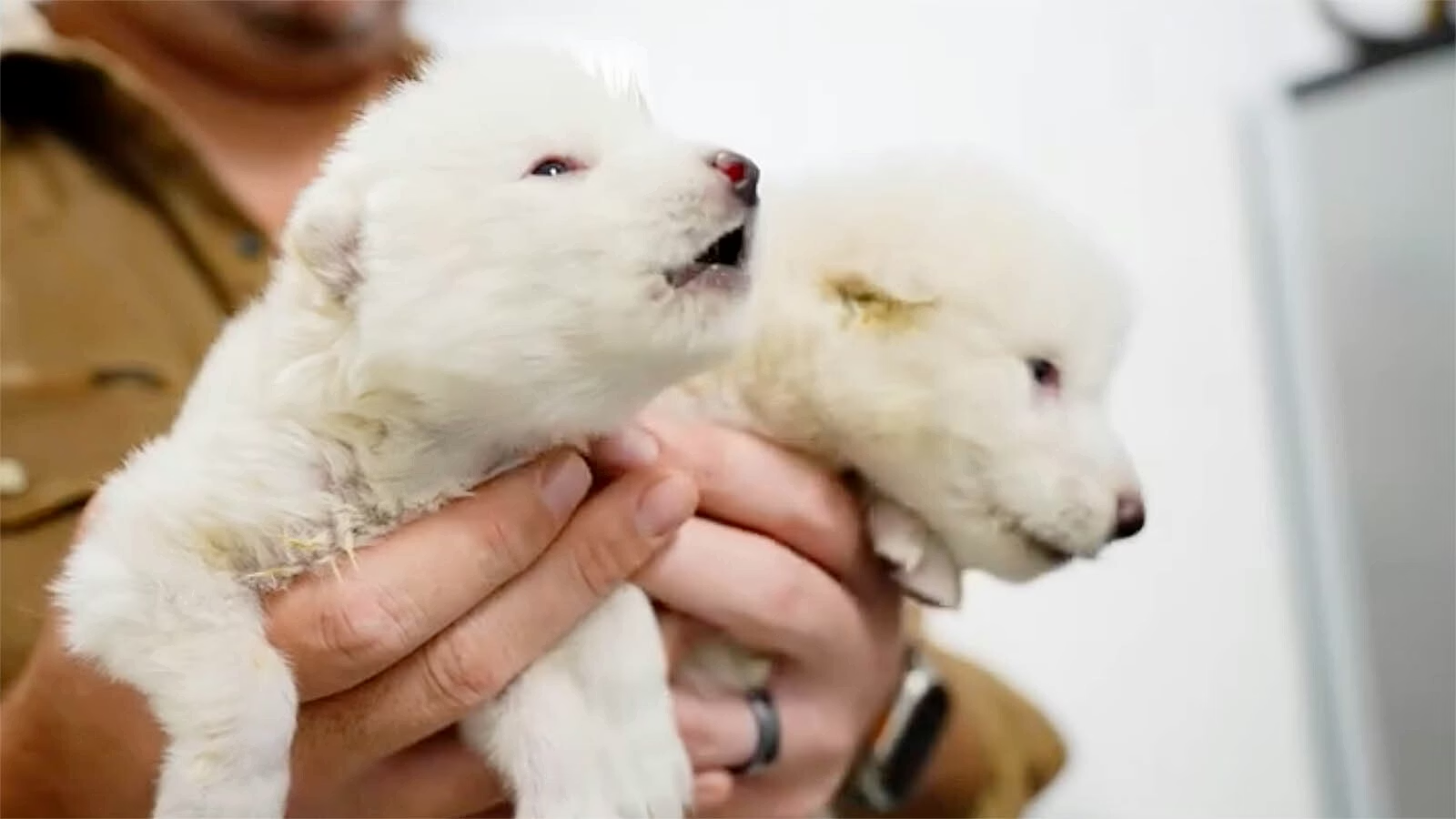
In the rich tapestry of Roman mythology, Romulus and Remus stand as twin brothers abandoned at birth, only to be rescued and nurtured by a legendary she-wolf before founding the city of Rome. This enduring tale of survival and destiny has inspired art, literature, and national identity for millennia. Today, the story takes a revolutionary turn with the romulus and remus dire wolves—genetically engineered marvels brought back from extinction by Colossal Biosciences. Born in 2024, these pioneering animals fuse ancient legend with 21st-century science, reviving traits of the long-lost dire wolf species.
The Legendary Origins of Romulus and Remus
The myth of Romulus and Remus originates in ancient Roman lore, where the twins were born to the vestal virgin Rhea Silvia and the god Mars. King Amulius, fearing a threat to his throne, ordered their death by abandonment on the Tiber River. Later adopted by a shepherd named Faustulus, the brothers grew into strong leaders who attracted followers.
Discovering the Mighty Dire Wolves of Prehistory
Dire wolves, scientifically known as Aenocyon dirus, were formidable predators that roamed North and South America for over 100,000 years until their extinction around 10,000 to 13,000 years ago. Larger and more robust than modern gray wolves, they featured powerful shoulders, broad skulls, and massive jaws suited for hunting megafauna like giant sloths and bison.
The Science of De-Extinction: Turning Fantasy into Reality
De-extinction represents a frontier in biotechnology, where ancient DNA meets CRISPR gene editing to recreate lost species. Colossal Biosciences pioneered this by sequencing genomes from dire wolf fossils, including a 13,000-year-old tooth and a 72,000-year-old ear bone. Using endothelial progenitor cells from gray wolf blood, edited nuclei were transferred into donor eggs from surrogate dogs. This efficient method avoided traditional cloning pitfalls, enabling successful pregnancies monitored through advanced ultrasounds and planned cesarean births.
How Colossal Biosciences Created the Romulus and Remus Dire Wolves
In a landmark achievement announced in 2025, Colossal Biosciences introduced the romulus and remus dire wolves as the world’s first de-extinct animals. The naming honors Roman mythology’s wolf-raised twins and nods to Game of Thrones’ direwolf lore for Khaleesi. From 45 engineered embryos, these three thrived without complications, showcasing minimal genetic tweaks that produced dramatic physical differences.
A Day in the Life of the Revived Romulus and Remus Dire Wolves
Now over a year old in 2026, the romulus and remus dire wolves exhibit striking wild behaviors in their secure 2,000-acre U.S. preserve. They play by chasing and nuzzling yet remain aloof from humans, retreating instinctively—a true lupine trait. Fed a diet of deer, beef, and organ meats, they practice predatory skills without live prey.
Challenges and Criticisms Surrounding the Project
Despite its breakthroughs, the romulus and remus dire wolves project faces scrutiny from scientists who argue these animals are genetically modified gray wolves rather than true dire wolves. Bioethicists highlight potential health issues from gene editing, while some view the effort as diverting resources from protecting living species. Colossal maintains the work aligns with biodiversity goals, emphasizing hope over perfection.
The Broader Impacts: What the Romulus and Remus Dire Wolves Mean for the Future
The romulus and remus dire wolves symbolize humanity’s growing power as an evolutionary force, inspiring advances in de-extinction for species like woolly mammoths and thylacines. By refining gene-editing techniques, Colossal aims to boost genetic diversity in endangered animals and restore lost ecosystem functions. Their story encourages public engagement with conservation, blending myth, science, and ethics in discussions about biodiversity loss. As these wolves mature and form packs, they offer lessons on rewilding and climate adaptation.
FAQs
What exactly are the romulus and remus dire wolves?
Born in 2024 and 2025, Romulus and Remus are male twins, with Khaleesi as their sister. They possess edited gray wolf DNA featuring larger size, stronger builds, and unique traits like white coats and distinct howls.
How were the romulus and remus dire wolves genetically created?
These changes were introduced via nuclear transfer into surrogate dog eggs, resulting in viable embryos implanted for birth. No ancient DNA was directly spliced; instead, precise modifications recreated key physical and behavioral features.
Why were they named Romulus and Remus?
The names draw directly from Roman mythology, where twin brothers Romulus and Remus were famously raised by a she-wolf. This choice connects the ancient legend of wolf-nurtured founders to the modern revival of dire wolf-like animals. A third pup, Khaleesi, references Game of Thrones’ direwolves for added cultural resonance. The naming emphasizes themes of survival, pack bonds, and humanity’s fascination with wolves across history and popular culture.
Are the romulus and remus dire wolves truly extinct species revived?
While promoted as de-extinct, experts clarify they are modified gray wolves with dire wolf-inspired traits rather than identical replicas. Genetic differences between the species were too vast for complete resurrection with limited edits. They serve as ecological proxies but face debates over authenticity and conservation ethics. Their value lies in advancing technology and public awareness, even if not a perfect scientific match to prehistoric dire wolves.
Conclusion
The romulus and remus dire wolves exemplify an extraordinary convergence of mythology and science, transforming an ancient Roman legend into a living testament to human ingenuity. From the she-wolf’s care in myth to today’s gene-edited predators, their story highlights both the wonders and responsibilities of de-extinction. As debates continue on ethics and ecology, these animals inspire hope for reversing biodiversity loss. By embracing such innovations thoughtfully, society can honor the past while safeguarding the future—one howl at a time.














Leave a Reply